



WhatsApp lead generation is the process of capturing and converting prospects through direct conversations using ads, widgets, QR codes, and group engagement on WhatsApp. With open rates exceeding 95%, WhatsApp outperforms email marketing's typical 20–25% open rate by a wide margin. That gap matters because it means your follow-up messages get read. Lead generation from WhatsApp works across multiple entry points: Click-to-WhatsApp (CTWA) ads, website chat widgets, QR codes, and organic group participation. Each method feeds prospects into a conversation rather than a form, and that shift alone changes conversion dynamics entirely. The Mastros WhatsApp extension exports the member list of a group you are in to CSV, JSON or JSONL.
What tools do you need for WhatsApp lead generation?
The WhatsApp Business API is the foundation for any serious lead generation effort. The free WhatsApp Business app works for solo operators, but it caps automation, limits multi-agent access, and offers no CRM integration. The API removes those limits and connects your conversations to tools like HubSpot, Salesforce, or any webhook-compatible CRM.
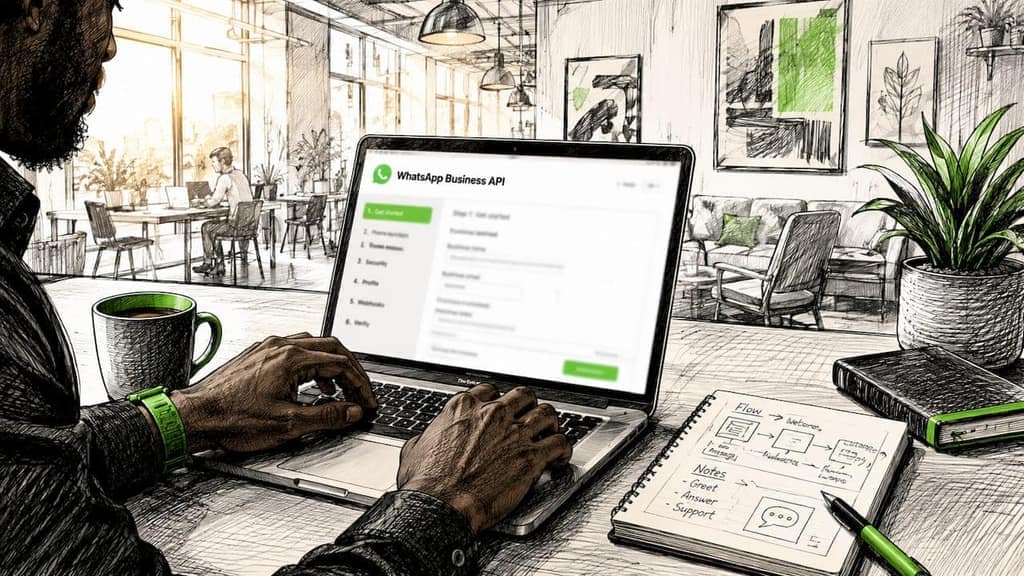
CRM integration is not optional if you want a real pipeline. Without it, WhatsApp becomes a black hole where leads arrive, get answered once, and disappear. A connected CRM logs every conversation, tracks lead status, and triggers follow-up sequences automatically.
Beyond the API and CRM, you need three more components:
- Chatbot or WhatsApp Flows builder: Tools that run qualification sequences inside the chat window without human involvement.
- Entry point infrastructure: CTWA ads in Meta Ads Manager, a website chat widget, or printed QR codes that open a pre-filled WhatsApp conversation.
- Broadcast and sequence tool: For nurturing warm leads who have not yet converted.
Pro Tip: Set up your WhatsApp Business profile completely before running any ads. A missing business description or empty catalog signals low credibility and drops your conversion rate before a prospect even sends a message.
How do Click-to-WhatsApp ads and chat widgets drive leads?
CTWA ads are Facebook or Instagram ads that open a WhatsApp conversation instead of sending the user to a landing page. That single change removes the biggest friction point in digital lead generation. CTWA ads reduce cost-per-lead by 30–60% compared to traditional landing page forms. The reason is simple: a prospect clicks, types one message, and they are already in your pipeline.
The pre-filled message feature makes this even more effective. You configure the ad so the first message is already written when the chat opens. The prospect just hits send. That removes the blank-screen hesitation that kills conversions on standard contact forms.
WhatsApp's 72-hour service window gives you room to engage a new lead with multiple touchpoints at no extra cost. Use that window to send a welcome message, share a relevant resource, and ask a qualifying question. By the end of the window, you have enough data to score the lead and decide next steps.
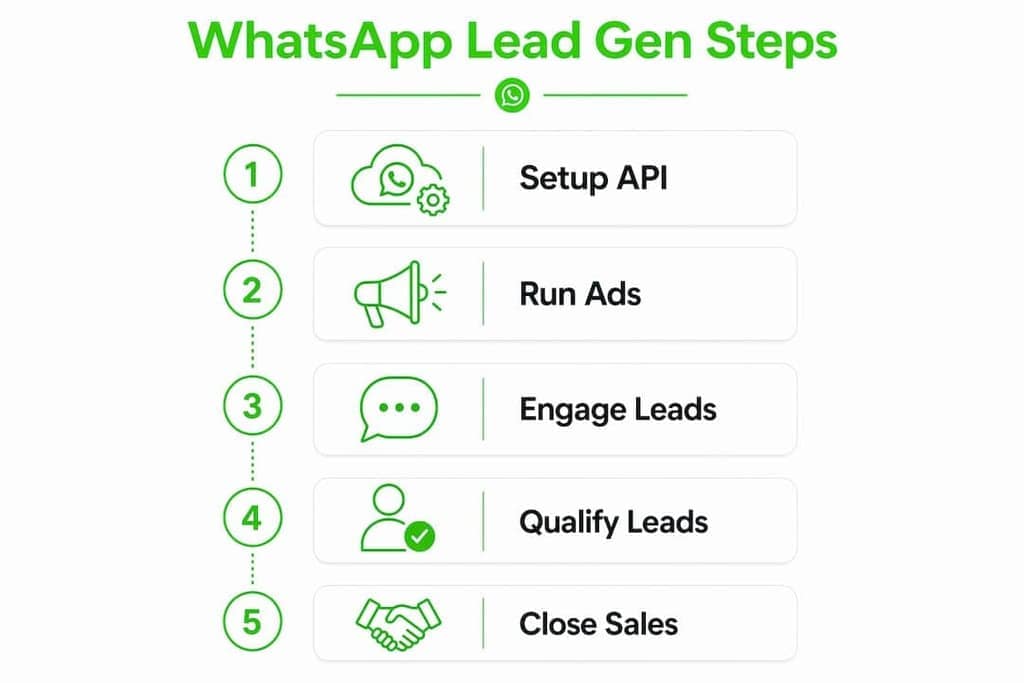
Website chat widgets work on the same principle. Replacing a contact form with a WhatsApp widget can double inquiry volume because the barrier drops from "fill out seven fields" to "send one message." For high-traffic sites, conversion rates from visitor to WhatsApp lead run 3–7%. That is a meaningful number when you are driving thousands of visitors per month.
Key advantages of CTWA ads and chat widgets over traditional forms:
- No landing page to build or maintain.
- Leads arrive pre-warmed by the ad creative they just saw.
- Every conversation is logged in one inbox, not scattered across email threads.
- You can qualify, nurture, and close inside the same thread.
How can WhatsApp groups drive low-cost, high-quality leads?
WhatsApp group lead generation is one of the most underused tactics in B2B and local marketing. Group-based leads cost between $0 and $5 per lead, compared to $50–$200 in paid channels. The cost difference is real because you are not paying for impressions. You are participating in communities where your prospects already gather.
The quality advantage is just as significant. Group recommendations drive 3–5 times higher conversion rates than cold outreach. A prospect who sees you answer a question helpfully in a group already trusts you before you send a direct message.
The process for turning group participation into qualified leads follows a clear sequence:
- Find the right groups. Search for niche groups where your buyers congregate. Industry forums, local business groups, and product-specific communities are the best starting points.
- Monitor for buying signals. Watch for phrases like "looking for a supplier," "anyone recommend," or "need help with." Intent monitoring in groups catches prospects who have already expressed a specific need.
- Respond within 2–10 minutes. Responding quickly to buying signals balances credibility and speed. A fast, helpful public reply positions you as the expert before anyone else jumps in.
- Move to a direct message. After a public reply, send a short DM referencing the group conversation. Keep it one sentence and offer something specific.
- Qualify in the DM. Ask two or three questions to confirm fit before pitching anything.
| Stage | Action | Goal |
|---|---|---|
| Group monitoring | Track keywords daily | Catch active buying intent |
| Public reply | Answer helpfully in the thread | Build visible credibility |
| Direct message | Reference the group exchange | Open a private conversation |
| Qualification | Ask budget, timeline, need | Score the lead before pitching |
Pro Tip: Never pitch in the group itself. The moment you post a promotional message in a community thread, you burn the trust you built. Save the offer for the DM.
Group message read rates run 70–80% in active communities. That means your public replies get seen. Treat every group interaction as a public audition, not a private sales call.
What role does automation play in qualifying WhatsApp leads?
Automation handles the part of lead generation that does not scale: the repetitive back-and-forth of early qualification. AI-driven chatbots qualify leads 24/7 without adding headcount. They ask the same discovery questions a sales rep would ask, capture the answers in structured format, and score the lead before a human ever gets involved.
A well-built WhatsApp Flows qualification sequence mirrors a sales discovery call. It asks about budget, timeline, location, and specific needs. Structured in-chat forms convert unstructured chat data into CRM inputs that trigger the right follow-up automatically. The goal is clean webhook data feeding your CRM, not a pile of unread inbox messages.
The routing logic matters as much as the questions. Hot leads (high budget, short timeline, clear need) go straight to a sales rep with a full conversation summary. Warm leads enter a nurture sequence. Cold leads get tagged for a follow-up in 30 days. That three-tier system keeps your sales team focused on the conversations most likely to close.
Common mistakes that break automation:
- Skipping data capture. If your chatbot does not push data to your CRM, the conversation is invisible to your pipeline.
- Overusing broadcast messages. Sending the same message to every lead, regardless of where they are in the funnel, trains people to ignore you.
- No human escalation path. A chatbot that cannot hand off to a real person loses hot leads who want to talk now.
Pro Tip: Build your chatbot flow by writing out your best sales rep's first five questions. That conversation is your qualification script. Automate it exactly as they would say it, not as a form would ask it.
What are the biggest pitfalls in WhatsApp lead generation?
Account reputation is the most fragile part of any WhatsApp marketing program. Bulk-joining groups or sending unsolicited messages triggers rapid bans. Meta's systems detect unnatural volume spikes and flag accounts before you realize what happened. The fix is a gradual warm-up: start with low message volumes, increase slowly over weeks, and never send the same message to hundreds of contacts at once.
Personalized, consent-based messaging is the standard that protects your sender status. Every contact in your broadcast list should have opted in explicitly. Every message should include a clear opt-out option. This is not just a best practice. It is a Meta policy requirement, and violating it costs you your account.
"The businesses that win on WhatsApp long-term are the ones that treat it like a relationship channel, not a broadcast channel. Permission, pacing, and personalization are what separate a healthy pipeline from a banned account."
Track these four metrics to know if your program is healthy:
- Opt-in rate: The percentage of entry-point visitors who start a conversation.
- Chatbot completion rate: How many leads finish your qualification flow.
- Lead-to-conversation rate: How many qualified leads turn into active sales conversations.
- Opt-out rate: If this climbs above 2%, your messaging frequency or relevance is off.
WhatsApp lead generation does not operate in a silo. Pair it with email retargeting for leads who go cold, and use Meta's retargeting audiences to re-engage prospects who clicked your CTWA ad but never replied.
Key Takeaways
WhatsApp lead generation works best when you combine intent-based group participation, CTWA ads, and automated qualification flows connected to a CRM.
| Point | Details |
|---|---|
| API over free app | The WhatsApp Business API is required for automation, multi-agent access, and CRM integration at scale. |
| CTWA ads cut CPL | Click-to-WhatsApp ads reduce cost-per-lead by 30–60% by removing landing page friction entirely. |
| Groups are high-ROI | Group-based leads cost $0–$5 each and convert 3–5 times better than cold outreach. |
| Automate qualification | Chatbot flows capture budget, timeline, and need, then route leads to the right follow-up automatically. |
| Protect your account | Gradual warm-ups, consent-based lists, and paced broadcasts keep your sender reputation intact. |
WhatsApp lead gen: what I've learned after watching teams get it wrong
Most teams I've seen approach WhatsApp like it's a faster email list. They import contacts, blast a broadcast, and wonder why their account gets flagged in week two. The platform rewards conversation, not volume.
The teams that actually build pipelines on WhatsApp do one thing differently: they treat every group they join as a community they are responsible to, not a list they own. That mindset shift changes everything. You stop looking for shortcuts and start looking for ways to be genuinely useful. The leads follow naturally.
The other thing I'd push back on is the obsession with automation at the expense of the first touch. Your chatbot should handle qualification, not the welcome. The first message a prospect receives should feel like it came from a person. After that, automation can carry the load. But if the first reply is obviously a bot, you've already lost the warmth that makes WhatsApp different from every other channel.
Track your chatbot completion rate weekly. If it drops below 60%, your flow is too long or too pushy. Shorten it. Ask fewer questions. Get to value faster. The best qualification flows feel like a helpful conversation, not an interrogation.
Elias
How Mastros fits into your WhatsApp lead pipeline
Building a WhatsApp lead pipeline requires clean data at every stage. Mastros makes that easier by letting you export WhatsApp group members directly from WhatsApp Web, with no API and no automation touching the platform itself.
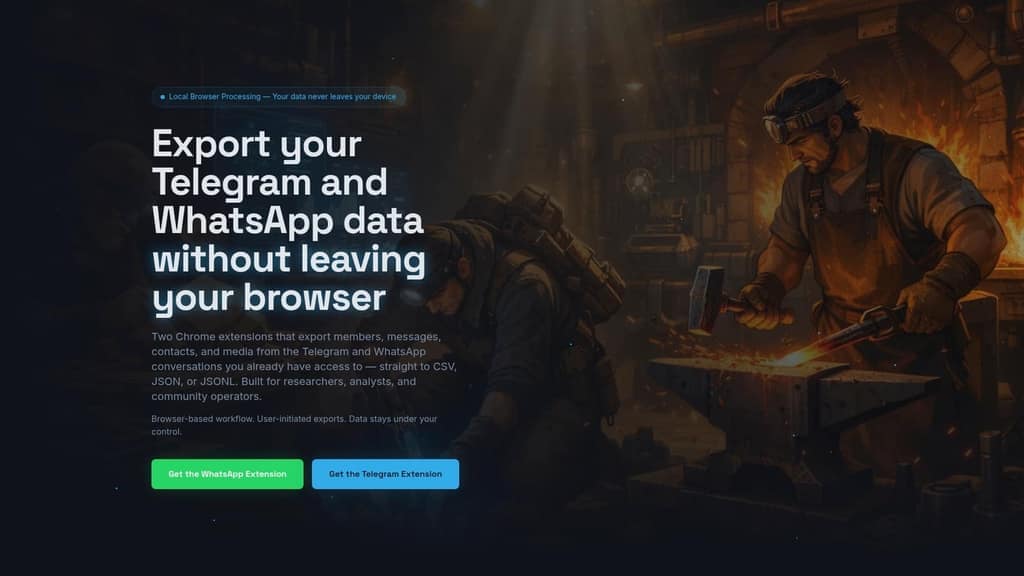
The Mastros WhatsApp extension runs entirely in your browser. Your data never leaves your device. You export group members, chat messages, and recent contacts to CSV, JSON, or JSONL, then feed that data into your CRM or qualification workflow. For growth marketers who want to identify group participants before reaching out, or researchers mapping community membership, Mastros removes the manual copy-paste work that slows every early-stage pipeline down. It's a read-only tool built for people who take data privacy seriously and want results without shortcuts.
FAQ
What is WhatsApp lead generation?
WhatsApp lead generation is the practice of capturing and qualifying prospects through direct conversations on WhatsApp, using entry points like CTWA ads, website widgets, QR codes, and group participation.
How much does lead generation from WhatsApp groups cost?
Group-based WhatsApp leads typically cost between $0 and $5 per lead, compared to $50–$200 for paid advertising channels, with conversion rates 3–5 times higher than cold outreach.
Do I need the WhatsApp Business API to generate leads?
The free WhatsApp Business app works for very small volumes, but the API is required for chatbot automation, CRM integration, and managing multiple agents at scale.
How do I avoid getting my WhatsApp account banned?
Avoid bulk messaging and unsolicited outreach. Use a gradual warm-up process, send only to opted-in contacts, personalize every broadcast, and include a clear opt-out option in every message.
What metrics should I track for WhatsApp lead generation?
Track opt-in rate, chatbot completion rate, lead-to-conversation rate, and opt-out rate. A rising opt-out rate above 2% signals that your messaging frequency or content relevance needs adjustment.